
Agatha Christie's The Mysterious Affair at Styles - classic fiction
Why Poirot doe only show once in the top best books list from all the 87 times his character appeared in stories?

About this book:
About the author:
About the Midwest Journal Writers' Club:


Related Sites
Review: "The Mysterious Affair at Styles" by Agatha Christie ... - In this first novel by Agatha Christie, published in 1920, she introduces the inimitable Poirot, who would go on to appear in 33 Christie novels and 54 short stories. The plot of The Mysterious Affair at Styles deals with a ...The Harper Lee Prize for Legal Fiction | Amicae Curiae - Last year marked the 50th anniversary of the publication of To Kill a Mockingbird by Harper Lee. Entries have recently closed for the University of Alabama Law School, where Harper Lee studied law, and the American Bar ...
New on CD « Sidney Public Library - The Affair by Lee Child; The Mysterious Affair at Styles by Agatha Christie; The Eagle Catcher by Margaret Coel; Arctic Drift by Clive Cussler; Medusa by Clive Cussler; Mile 81 by Stephen King; War Horse by Morpurgo; Call ...
Monday contest: Win 10 terrific debut novels | The Book Case - 5 August 2013 at 2:36 pm. Gone With The Wind, for sure. Recently, Before I Go To Sleep. Reply. Elizabeth Bevins says: 5 August 2013 at 2:38 pm. The Mysterious Affair at Styles by Agatha Christie is my favorite first novel.
Language Tips: Equable and equitable & people or persons ... - And finally, from Agatha Christie's The Mysterious Affair at Styles (1916), chapter 8: From your account, there are only two people whom we can positively say did not go near the coffee-Mrs. Cavendish, and Mademoiselle ...
Jack London's Call of the Wild classic fiction
Of all of Jack London's books, why does this cross-bred dog story wind up his best?

About this book:
About the author:
About the Midwest Journal Writers' Club:


Related Sites
Call of the Wild | - Magazine - College of Charleston - Call of the Wild. June 20, 2013 · class1. It's that small moment between dawn and day, dusk and dark. It's the mosquitoes swarming, the heron hunting, the frogs chirping. It's the subtle rustle picking up in the trees' leaves. The precise cast in ...Call of the Wild Movie, LLC v. Does 1-1,062 | JOLT Digest - Federal Court Upholds Subpoenas Compelling ISP to Identify Over 1000 Alleged File-Sharers By Paul Cathcart - Edited by Jad Mills. Call of the Wild Movie, LLC v. Does 1-1,062, 2011 U.S. Dist. LEXIS 29153 (D.D.C. March ...
Fire's call of the wild | A Fire History of America (1960-2010) - Fire's call of the wild. Mountains, forests, burns - the Selway-Bitterroot Wilderness. Between extremities. Man runs his course; A brand, or flaming breath. Comes to destroy. All those antinomies- - William Butler Yeats ...
Oil executives tune out the call of the wild Arctic | Financial Post - The high Arctic, once the irresistible frontier for oil and gas exploration, is quickly losing its appeal as energy firms grow fearful of the financial and public relations risk of working in the pristine icy wilderness.
The Call of the Wild - Banned Books Awareness - Critic Maxwell Geismar, in 1960, referred to The Call of the Wild as "a beautiful prose poem," and Editor Franklin Walker said that it "belongs on a shelf with Walden and Huckleberry Finn." But, as one might expect, such a ...
Loyola Magazine » Call of the Wild - Call of the Wild. Sean Mann captures lifelong love in hunting business. Page 1 of 2. By Magazine staff | Photos courtesy of Sean Mann. Sean Mann with ducks. Sean Mann, '84, was riding in his father's car when he first heard the honking of a ...
Charles Dickens' Great Expectations - Classic Fiction
The 13th success in his own life, this author has only two books in the Writers Club top 26.

-->


Related Sites
Joint Center for Artificial Photosynthesis-North is Now Open ... - As a major part of that initiative, JCAP therefore carries great expectations. “We want the 'J' in JCAP to stand for Juggernaut,” Rohlfing said. Also on hand for the JCAP-North opening and ribbon-cutting ceremony were ...From Great Expectations to Valuable Skills - From Great Expectations to Valuable Skills. by admin on July 26, 2011 · 1 comment. Intern Rebecca Georges. My name is Rebecca Georges. I am originally from Miami, FL. and attend the University of Florida where my major is Business ...
Your Top 10 influential books? Here are mine - 8 Great Expectations, Charles Dickens 9 I Know Why the Caged Bird Sings, Maya Angelou 10 The World is Flat, Thomas Friedman. David Ammons says: April 6, 2010 at 3:35 PM. Sam was emailed this list by Jim DiPeso and ...
Which candidate would be better for Africa? | America.gov Blogs - ... was indicated when the clerics seized innocent Americans and massacred them decades back. [3] Take nothing on its looks; take everything on evidence. There's no better rule. Charles Dickens, Great Expectations (1861).

Mary Shelley's Frankenstein - yet another Writers' Club Selection
Classic fiction from the best - and tragedy haunted more than her characters...

-->
About this book:
(source: Wikipedia)
(source: Wikipedia)


Related Sites
Undead flock to Capitol to protest "Frankenstein" Republican budget ... - The undead began flocking to the Capitol on Thursday as House Republicans caucus meets to reportedly cobble together a dead-on-arrival budget bill. Several pieces of already dead and decaying policy bills may be ...From ADL Team Member… Alan Workman: Re-Usability Support ... - The packages may be "Frankenstein packages" in which different parts have different appearances, navigation structures, and reporting mechanisms. They will, however, be viewable in a SCORM player and modifiable in the ...
Based on the Book | Alliance Public Library Based on the Book ... - Mary Shelley's Frankenstein has been adapted and reimagined time and time again, and with Tim Burton's stop motion film Frankenweenie hitting theaters this weekend, I thought it appropriate to give a shout out to Mary ...
Senate Democrats will expose Republican Frankenstein legislation ... - Iowans must be shocked to learn that the Governor and Republican legislators have cobbled together a budget bill that looks like Frankenstein. How better to describe stitching together several pieces of dead legislation into ...
Be Kind to Ticks, They Could Save Your Life | It's Our Environment - After successful surgery in August, I'm back to work with a better appreciation for life even if the scars on my chest make me look like a Frankenstein wannabe. As for my new found fondness for ticks, anytime I'm in a quiet room ...
Discovery » Discovery Archive » Science in the Sky: The WSU ... - Note: This is the first in our new series, "Scene Around Campus: A Glimpse into WSU's Corners and Curiosities." Join us as we explore the many nooks and crannies of campus that residents and visitors might otherwise miss.
Self-(re)publishing classic fiction faster and easier than ever.
Dickens' Tale Becomes First Fully Published Writers' Club Selection
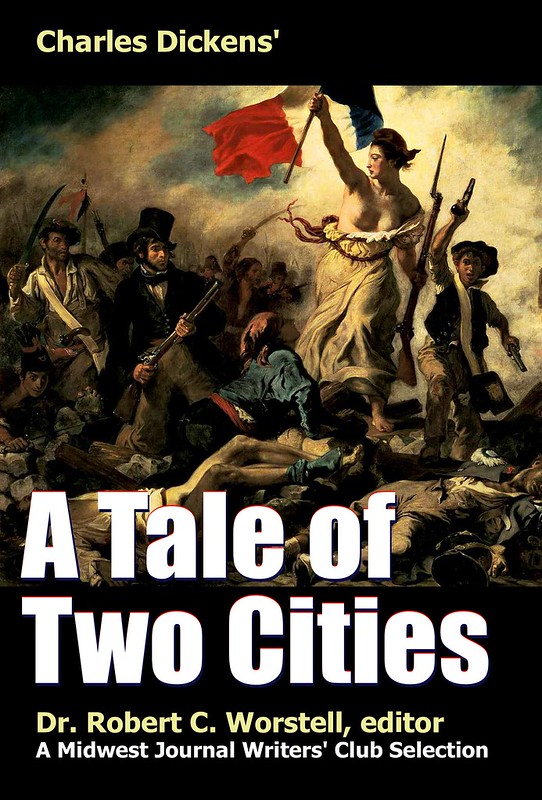
A Tale of Two Cities by Charles Dickens
The novel depicts the plight of the French peasantry demoralized by the French aristocracy in the years leading up to the revolution, the corresponding brutality demonstrated by the revolutionaries toward the former aristocrats in the early years of the revolution, and many unflattering social parallels with life in London during the same time period. It follows the lives of several protagonists through these events. The most notable are Charles Darnay and Sydney Carton. Darnay is a former French aristocrat who falls victim to the indiscriminate wrath of the revolution despite his virtuous nature, and Carton is a dissipated English barrister who endeavors to redeem his ill-spent life out of his unrequited love for Darnay's wife...Dale Carnegie – How to Win Friends and Influence People

That’s no understatement. If you studied nothing but human relations – particularly this book – you’d be able to get the highest-paid jobs available today.
The reason that this book is a continuing best sellers is very, incredibly fundamental. It’s written in a very simply, frank approach. So it’s easily digested and applied. This book covers far more than just making friends and influencing people. There are tons of these around. Why this book is a continuing success is that it covers very, very basic principles which affect all humankind at its core. Its very core.
So when you are actively applying this, you aren’t just learning some new tricks – you are learning some of the most basic and underlying principles which drive all Life around you.
Paperback, 695 pages
Earl Nightingale’s – On Success – Strangest Secret

When I found myself counseling and consulting for a living, my professional studies soon took me into the best selling authors and personalities of this field. Soon I had discovered Nightingale’s “Strangest Secret”, which had been a popular continuing best seller since my birth – and which had spawned an entire industry.
I was amazed that this one recording had created that effect. But in studying the material it contained, it was soon no surprise.
Nightingale had put his finger on a very vibrant pulse of humankind – and found what made it tick and how it could improve any condition it was experiencing through thought alone.
So it is with great pleasure that I found this edition of “On Success” and edited it for a new reading audience.
If you are a fan of Nightingale’s, you’ll probably see many essays you’ve heard through his recordings. Now to see these in text, you can have these same tips at your fingertips, to review over and over – as many times as needed – to help you on your way to achieving your own success.
For that was the one goal Nightingale strove after – to educate and inform as many people as possible about the many techniques they could use to make themselves an unqualified success in whatever they chose to do. He studied, wrote, and produced many classic essays through his radio show and his many recordings – as well as published works in a variety of articles.
Paperback, 237 pages
Printed trade paperback version of On Success with "Strangest Secret" full transcript may be purchased from my Lulu.com storefront.
Napoleon Hill’s How to Think and Grow Rich

Born in 1883 in a two-room log cabin in Virginia’s Blue Ridge Mountains, Napoleon Hill worked as a newspaper reporter to finance his way through Georgetown University Law School.
The quality of his reporting prompted Robert Taylor, a magazine publisher, to employ Hill to write a series of success stories of famous men, starting with Andrew Carnegie. Carnegie was so impressed from the interview that he commissioned Hill to complete what would become a twenty-year assignment – interviewing over 500 of the most successful men in America in order to distill from their experiences a common success formula.
Hill published his first interpretation of this individual achievement philosophy in 1928 as the multi-volume Law of Success, exactly twenty years after the Carnegie interview. Think and Grow Rich was a modern abridgment of that set, published with the purpose of inspiring the nation to throw off the fears of the Great Depression. What he achieved was a landmark volume, one which has set the bar to measure all other self-help books against. Only two other books have achieved anywhere near this book’s following: Wattle’s Science of Getting Rich, and Haanel’s Master Key System.
Hill described his efforts in an essay “You Can Work Your Own Miracles”:
“For twenty odd years I was forced to struggle, in mastering the problems incidental to my work in organizing the world’s first practical philosophy of success. First, I was forced to struggle in preparing myself with the necessary knowledge to produce the philosophy. Secondly, I was forced to struggle to maintain myself economically while doing the research necessary to organize the philosophy. Then I met with still greater necessity to struggle while gaining recognition from the world for myself and the philosophy.
“Twenty years of struggle without any direct financial compensation is an experience not calculated to give one sustained hope, but it was the price I had to pay for a philosophy which was destined to benefit untold numbers of people, many of whom were not born when I began my work.
“Discouraging? Heartbreaking? Not at all, for I recognized from the beginning that out of my struggle would come triumph and victory in proportion to the labors invested in my task. In this hope I have not been disappointed, but I have been overwhelmed with the bountiful manner in which the world has responded and paid me tribute for the long years of struggle that went into my work.
“Also, I have gained from my struggle something of still greater and more profound value. It is recognition that through my struggles I have reached deeply into the spiritual wells of my soul, and there I have found powers available for every purpose I may desire -powers I never knew I possessed, and never would have discovered except by the means of struggle!
“From my experiences with struggle I discovered that the Creator never singles out an individual for an important service to mankind without first testing him, through struggle, in proportion to the nature of the service he is to render. Thus, through struggle, I learned to interpret the laws, purposes, and working plans of the Creator as they related to me and to mankind in general.”And that is what makes Hill’s work so important. Only two other authors of his century presented self-help students with a certain plan for their life to put it on a chosen track. This is what places Hill with Wattles and Haanel in the triumvirate of 20th century self-help classics. These all cover the same key points, and give the same answers to life’s questions. Hill, in fact, credits Haanel with his success through a personal letter years before Think and Grow Rich was written.
Instant download - ebook format:


Available from Lulu.com
This edition soon available on Amazon...


Wallace Wattles’ Science of Getting Rich

Innumerable people have gotten rich through using this slim volume.
More widely distributed today than when first published, Rhonda Byrne, producer of “The Secret” DVD was given this as a photocopy with the last pages missing – it inspired her to create an underground classic which in turn inspired a world around the Law of Attraction.
You can use this book to discover your own abundance. Get your copy today!
Paperback, 131 pages
Available from online from Lulu.com
THIS BOOK IS PRAGMATICAL, NOT PHILOSOPHICAL — a practical manual, not a treatise upon theories. It is intended for the men and women whose most pressing need is for money, who wish to get rich first, and philosophize afterward. It is for those who want results and who are willing to take the conclusions of science as a basis for action, without going into all the processes by which those conclusions were reached.
It is expected that the reader will take the fundamental statements upon faith, just as he would take statements concerning a law of electrical action if they were promulgated by a Marconi or an Edison, and, taking the statements upon faith, that he will prove their truth by acting upon them without fear or hesitation. Every man or woman who does this will certainly get rich, for the science herein applied is an exact science and failure is impossible.
In writing this book I have sacrificed all other considerations to plainness and simplicity of style, so that all might understand. The plan of action laid down herein was deduced from the conclusions of philosophy. It has been thoroughly tested, and bears the supreme test of practical experiment: It works.
(from the Introduction)
Charles Haanel’s Master Key System

Paperback, 272 pages
There is a change in the thought of the world.
This change is silently transpiring in our midst, and is more important than any which the world has undergone since the downfall of Paganism.
The present revolution in the opinions of all classes of men, the highest and most cultured of men as well as those of the laboring class, stands unparalleled in the history of the world.
Science has of late made such vast discoveries, has revealed such an infinity of resources, has unveiled such enormous possibilities and such unsuspected forces, that scientific men more and more hesitate to affirm certain theories as established and indubitable or to deny certain other theories as absurd or impossible, and so a new civilization is being born; customs, creeds, and cruelty are passing; vision, faith and service are taking their place. The fetters of tradition are being melted off from humanity, and as the dross of materialism is being consumed, thought is being liberated and truth is rising full orbed before an astonished multitude.
The whole world is on the eve of a new consciousness, a new power and a new consciousness, a new power and a new realization of the resources within the self. The last century saw the most magnificent material progress in history. The present century will produce the greatest progress in mental and spiritual power.
Let us see what are the most powerful forces in Nature. In the mineral world everything is solid and fixed. In the animal and vegetable kingdom it is in a state of flux, forever changing, always being created and recreated. In the atmosphere we find heat, light and energy. Each realm becomes finer and more spiritual as we pass from the visible to the invisible, from the coarse to the fine, from the low potentiality to high potentiality. When we reach the invisible we find energy in its purest and most volatile state.
And as the most powerful forces of Nature are the invisible forces, so we find that the most powerful forces of man are his invisible forces, his spiritual force, and the only way in which the spiritual force can manifest is through the process of thinking. Thinking is the only activity which the spirit possesses, and thought is the only product of thinking.
Addition and subtraction are therefore spiritual transactions; reasoning is a spiritual process; ideas are spiritual conceptions; questions are spiritual searchlights and logic, argument and philosophy is spiritual machinery.
Every thought brings into action certain physical tissue, parts of the brain, nerve or muscle. This produces an actual physical change in the construction of the tissue. Therefore it is only necessary to have a certain number of thoughts on a given subject in order to bring about a complete change in the physical organization of a man.
This is the process by which failure is changed to success. Thoughts of courage, power, inspiration, harmony, are substituted for thoughts of failure, despair, lack, limitation and discord, and as these thoughts take root, the physical tissue is changed and the individual sees life in a new light, old things have actually passed away, all things have become new, he is born again, this time born of the spirit, life has a new meaning for him, he is reconstructed and is filled with joy, confidence, hope, energy. He sees opportunities for success to which he was heretofore blind. He recognizes possibilities which before had no meaning for him. The thoughts of success with which he has been impregnated are radiated to those around him, and they in turn help him onward and upward; he attract to him new and successful associates, and this in turn changes his environment; so that by this simple exercise of thought, a man changes not only himself, but his environment, circumstances and conditions.
You will see, you must see, that we are at the dawn of a new day; that the possibilities are so wonderful, so fascinating, so limitless as to be almost bewildering. A century ago any man with a Gatling Gun could have annihilated a whole army equipped with the implements of warfare then in use. So it is at present. Any man with a knowledge of the possibilities contained in the Master Key has an inconceivable advantage over the multitude.
(from the introduction to Chapter One.)
Welcome!
Please enjoy.


 Posts
Posts

